By Mary Tucker | Senior Communications and Content Manager | IAEE
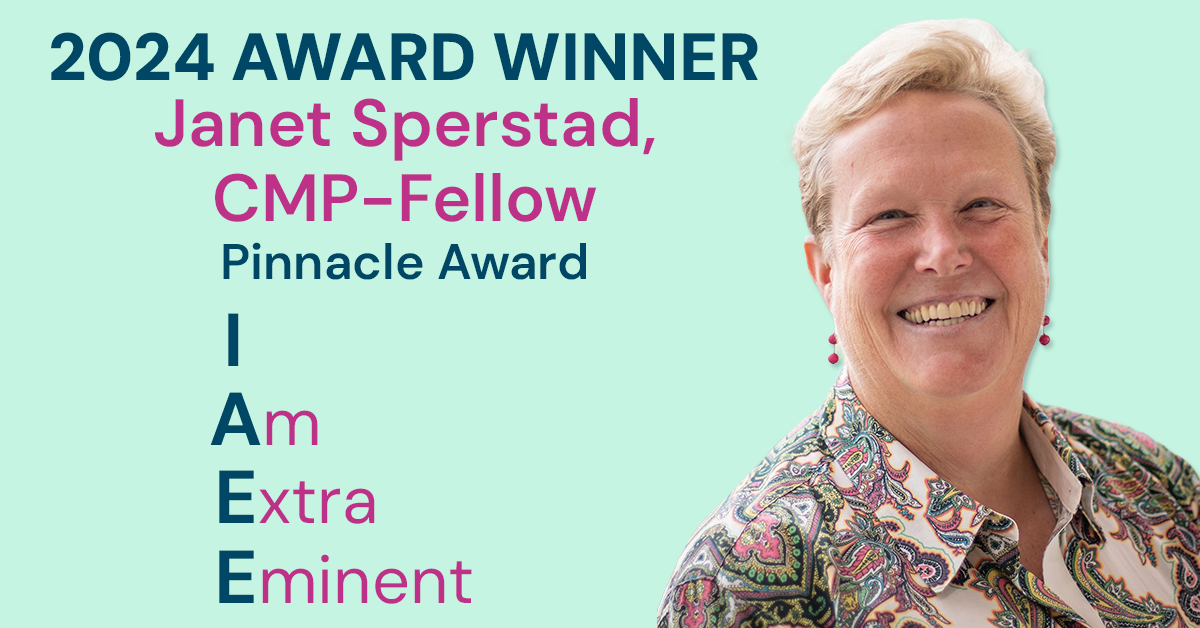
IAEE’s Pinnacle Award honors a member who has not only excelled in their career but has fundamentally shaped the trajectory of the entire exhibitions and events industry. Last year’s recipient, Janet Sperstad, CMP-Fellow, embodies this distinction in every aspect of her remarkable three-decade journey.
Janet’s influence extends far beyond traditional industry boundaries. While many professionals focus on executing exceptional events, Janet has dedicated her career to elevating the very foundation of what industry professionals do. Her groundbreaking work with IAEE and the U.S. Department of Labor resulted in the creation of a new industry sector titled Meetings, Events and Exhibition Management, a classification that officially recognizes this industry’s unique competencies and feeds crucial data into the “Bureau of Labor Statistics’ Occupational Outlook Handbook.”
This wasn’t merely an administrative achievement; it was a pivotal moment that legitimized the exhibitions and events industry in the eyes of government agencies, educational institutions and the broader business community. Janet’s continued efforts to establish Standard Occupational Classification (SOC) codes and update the ONET system (the nation’s primary source of occupational information) demonstrate her commitment to ensuring our industry has the data infrastructure needed to thrive in an evolving economy.
As an educator, mentor and thought leader, Janet has shaped countless careers through her contributions to IAEE’s “Art of the Show Textbook.” In addition, her role as a founding Certified in Exhibition Management (CEM) Faculty member and her innovative Neuroscience of Exhibitions and Events course resulted in the first dual badge program offered through Madison College. Her historic appointment as IAEE’s first full-time Faculty Board member and her 2017 induction into the Events Industry Council (EIC) Hall of Leaders underscore her unparalleled contributions to professional development within our industry.
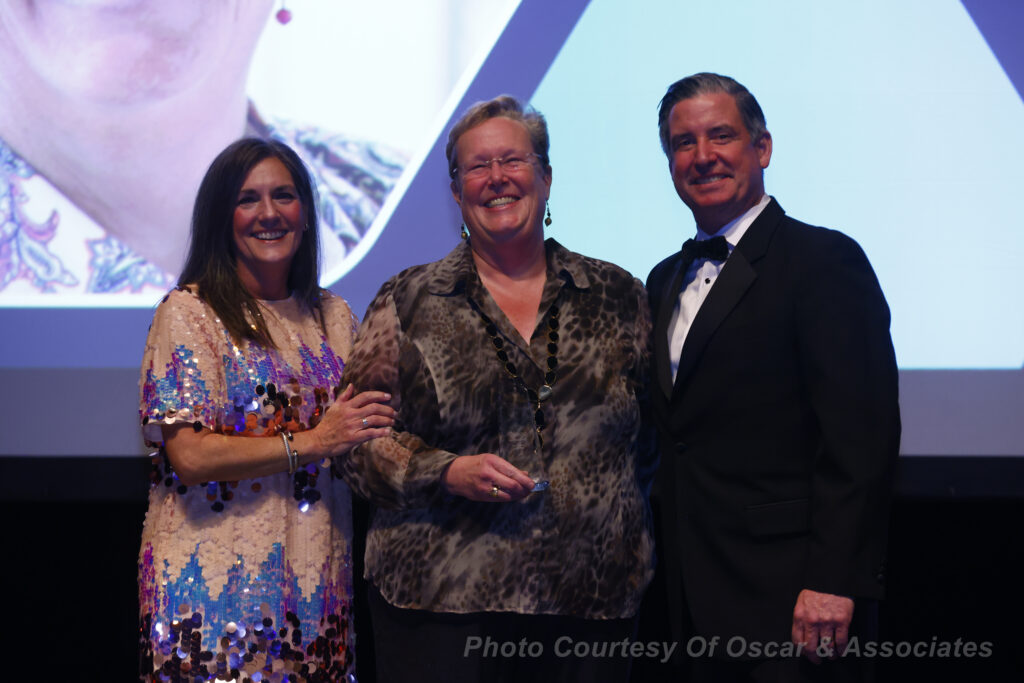
Janet’s commitment to professionalizing and elevating the exhibitions and events industry earned her the 2024 IAEE Pinnacle Award, which was presented to her this past December at Expo! Expo! IAEE’s Annual Meeting & Exhibition in Los Angeles, California.
Here, Janet shares lessons from her journey of transforming an industry from the inside out, the challenges of creating academic frameworks for a rapidly evolving field, and her vision for the next generation of exhibitions and events professionals.
Your work with IAEE led to the creation of a new industry sector as recognized by the U.S. Department of Labor: Meetings, Events and Exhibition Management. What is the significance to having government agencies recognize our industry as a distinct professional field, and what were the biggest challenges you faced in the process?
Janet: This work codified the skills and competencies of meetings, events, and exhibition professionals that are separate and distinct from hospitality and tourism:
- The U.S. Department of Labor and U.S Department of Commerce use this work as building blocks to distinguish the technical skills and competencies of exhibitions and events industry professionals today.
- This work powers the resources used by employers to classify exhibitions and events professionals, to identify the specific skills they need, and to develop relevant job descriptions.
- Academics use this work to develop competency-based learning and curriculum. High school advisors, parents, youth, and job seekers use it to explore careers.
IAEE’s involvement ensures that the exhibition competencies are included in these globally recognized tools and resources.
Our industry faces the challenge of many career entry points. Exhibitions and events work can still be an “accidental” career. People who become exhibitions and events practitioners face confusion and a lack of consensus on what it is we do as professionals – even what our industry is. And our value is often defined purely by our hospitality spend, not by the human experiences we create.
Our industry associations must have more unity and a common lexicon around who we are, the work and value exhibitions and events professionals deliver, and the knowledge, skills, and abilities exhibitions and events require. Tools and resources like what we created with the U.S. Department of Labor and Commerce help – but there is more work to be done to help our industry claim broader recognition for an economic and transformational powerhouse.
As a founding CEM Faculty member and creator of the Neuroscience of Exhibitions and Events course, how do you balance teaching theoretical concepts with the practical, fast-paced reality of our industry?
Janet: Exhibition professionals move people’s hearts and minds through the exhibition experiences they create. Understanding how people think is as important as what people think. The brain has an automatic, unconscious processing to minimize danger and maximize reward that impacts expectations, behavior, and decision-making.
Using neuroscience research on how the brain organizes and filters information allows exhibitions professionals to know what not to do at their next exhibition that negatively impacts the participants’ experience as well as how to design the events’ physical space to influence decision making and drive innovation.
I set the foundational competencies on the brain-based science of how we think, what influences our decision-making and our how our brain unconsciously organizes and responds to all stimuli. These elements that control much of human behavior. As technology dominates more our experiences, it’s more important than ever to deliver exhibition experiences that create moments of meaning, inspire creative thinking and problem solving, and foster deeper learning.
The course applies neuroscience underpinnings to real-life industry case studies and examples. I am grateful to be able to call upon my decades of experience as an exhibitions and events professional and on my masters in neuroscience and business leadership to help exhibition industry professionals and their businesses create success.
Your course was also groundbreaking as the first dual badge program through Madison College. What inspired you to explore this intersection, and how has understanding the science behind attendee behavior changed the way we should approach event design?
Janet: As a former faculty member of Madison College, I saw firsthand the value digital credentials offer to validate an individual’s knowledge and skill. The partnership between IAEE and Madison College provides participants with concrete evidence that they’ve mastered the learning outcomes of this course. Participants can search for jobs that call for knowledge and skills obtained through this class.
In your acceptance speech at Expo! Expo! in LA, you noted that you are one of five women to receive IAEE’s Pinnacle Award and spoke to the importance of representation across all communities within the industry. How would you like to see the industry excel in this endeavor?
Janet: First, just because women and other historically marginalized groups haven’t been recognized with awards doesn’t mean they haven’t been there all along, performing exceptional work.
Representation matters. If you see people who look like you, you can believe more strongly in your own ability to achieve. Having someone that you can identify with and relate to allows us to imagine possibilities, inspires us when we feel nervous, and validates what we know and can do so we can continue to build on our abilities and feel a sense of belonging with others.
Words matter. In researching award recipients – women like Jeanne Hayes, IAEE’s first Chairperson, who has a law degree when only 3% of women in the U.S. were lawyers, and Patty Barlow who set standards for exhibitions in Mexico that are still used today – words like “passionate,” “energetic,” and “enthusiastic” were used to describe these extraordinary women.
These are “soft” words that focus on personality and style, not results. What if we used the same language of results to describe women leaders that we use for men?
Passionate becomes BRAVE
Energetic becomes VISIONARY
Enthusiastic becomes HIGH IMPACT
We all have gifts to make our world a better place. Creating a space for all to share their gifts manifests a better future of everyone in our industry.
You have witnessed tremendous changes in how exhibitions are planned and executed, especially as we experience the digital transformation. What advice do you give to young professionals entering the field today, and what skills do you think will be most critical for future industry leaders?
Janet: The key to success for anyone in any stage of their career is curiosity. We grow in the direction of the questions we ask. So, asking questions that deepen your knowledge and perspective, listening for understanding, uncovering new possibilities, and asking, “what if?” and “what else could be true?” provides more value and relevance to those we serve and do business with in creating great exhibition and event experiences.